
Key features

Data mining for over 10 years
Utilizing a decade of accumulated expertise to extract meaningful biological insights.

Database with 36,000+ entries
Massive curated entries ensure a reliable foundation for peptide ADMET evaluation.
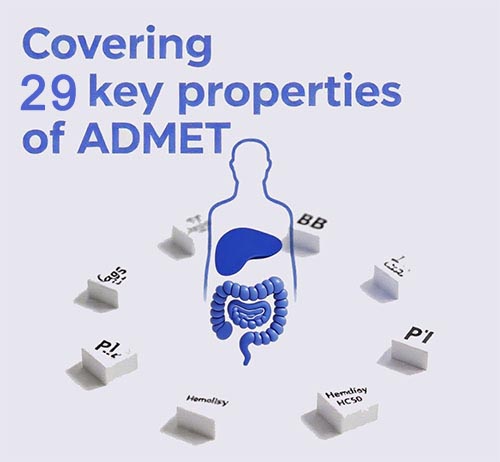
Covering 30 Key Properties of ADMET
In-depth coverage across Absorption, Distribution, Metabolism, Excretion, and Toxicity.
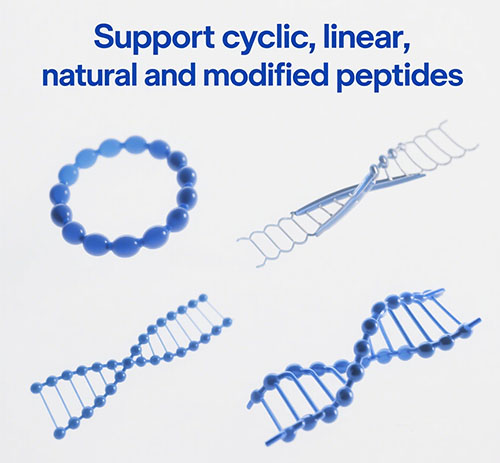
Supports Cyclic, Linear, Natural and Modified Peptides
Direct input of molecular structures allows it to go beyond a limited range of modification types.

Support for Cell Lines, Organs, and Species
Cross-species predictive modeling ensures wide applicability in biomedical research.

State-of-the-art AI algorithms
Harnessing cutting-edge artificial intelligence to enhance prediction accuracy and speed.
Quick start
Collaboration
Data and Privacy Statement
PepADMET does not permanently store user-uploaded files or input data. All inputs are only temporarily cached for processing and are deleted after completion.
Each user can only view their own submission records after login; no other users can access them. The server does not retain submitted data, ensuring confidentiality and privacy protection.
Please cite
If you find pepADMET helpful for your research, please cite the following publications: